
BEMIDJI, Minn. — Dreaded zebra mussels, which upset ecological balances, have reached the Turtle River chain of lakes that comprise the Mississippi River headwaters. A cabin owner found a mussel attached to a rock on 700-acre Lake Beltrami north of Bemidji. A state wildlife expert confirmed it was zebra mussel and found another nearby. The invasive species has been moving up the Mississippi and inland from the Great Lakes. The mussels attach themselves to boat hulls and hitchhike lake to lake.
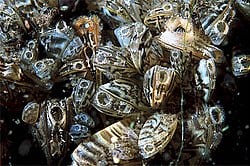
Little monsters. One of the world’s most invasive aquatic species. The delta-shape shell is usually striped, hence the name “zebra.” Typically the size of a fingernail.
Zebra mussel profile
Biologists say zebra mussels originally were confined in lake and rivers in the Caspian Sea and Black Sea basins in Russia and Ukraine. Expanding human commerce in the 1700s, including portages, carried the species to the Dnieper, Ural, and Volga rivers. Eventually the mussels reached other continents. The mussel is prolific. A female can produce 40,000 eggs each reproductive cycle and 1 million a year. The ecological damage comes partly from mussel feces that interact with lake bottom muck and decays. Water turns cloudy, which blocks sunlight. Without sun, water plants wither, and bottom-feeding fish lose their nutrition and die. Meanwhile the mussels spread to lakeshores. Like razor-sharp pebbles they spoil beaches. They clog residential and industrial water intakes and outlets. The Minnesota Natural Resources Department claims some success with a campaign encourage recreational boaters to check their craft for attached mussels and scrape them off.
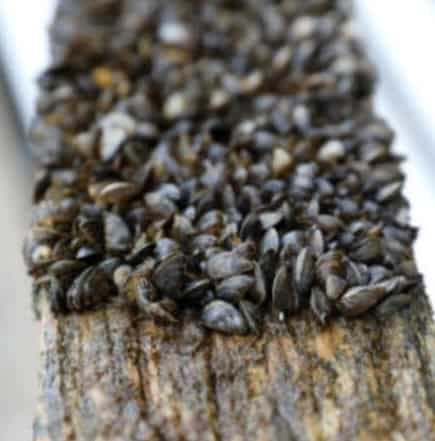
Mussel upon mussel. Clinging to a stick and cementing themselves on top of each other in a University of Wisconsin-Madison demonstration.