
MINNEAPOLIS — After months of foot-dragging, lies and cover-up, the Trump administration has turned over documents related indirectly to the January shooting of Renee Good on a Minneapolis street. The documents involve an earlier court case against ICE deportation agent Jonathan Ross. He was the agent who killed Good and who, months earlier, also shot a fleeing motorist in a traffic stop. The cases have a common denominator: Whether force was excessive. The attorney representing the man in the earlier case, Eric Newmark, said that government documents he sought have now been surrendered to a judge who demanded access to them. The judge is now reviewing the documents to decide if and how to release them, Nemark said. Unsettled question: Could the release of the Munoz- Guatemala documents signal a federal change in concealing documents involving Ross in the Renee Good slaying.
Jonathan Ross profile
Ross, now 44, was deployed to Iraq from 2004 to 2005. Returning home he attended college and joined the Indiana National Guard part-time. In 2007 he joined the Border Patrol in Texas. He worked out of El Paso until 2015 as a field intelligence agent. His duties included gathering and analyzing information on cartels and drug and human smuggling. As an ICE agent he recently had lived in a leafy Minneapolis neighborhood. Neighbors described him as a hard-core MAGA supporter who flew pro-Trump and “Don’t Tread On Me’” Gadsden flags outside his house. In an interview after the Renee Good slaying, his 80-year-old father called him a conservative Christian.
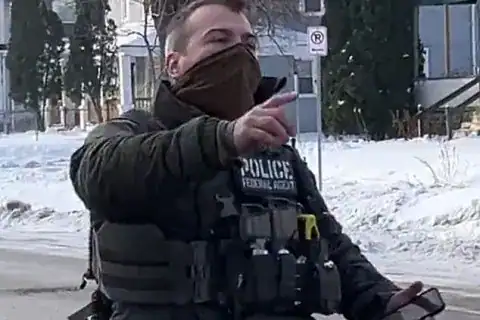
Ross. Masked at the Renee Good encounter in January.
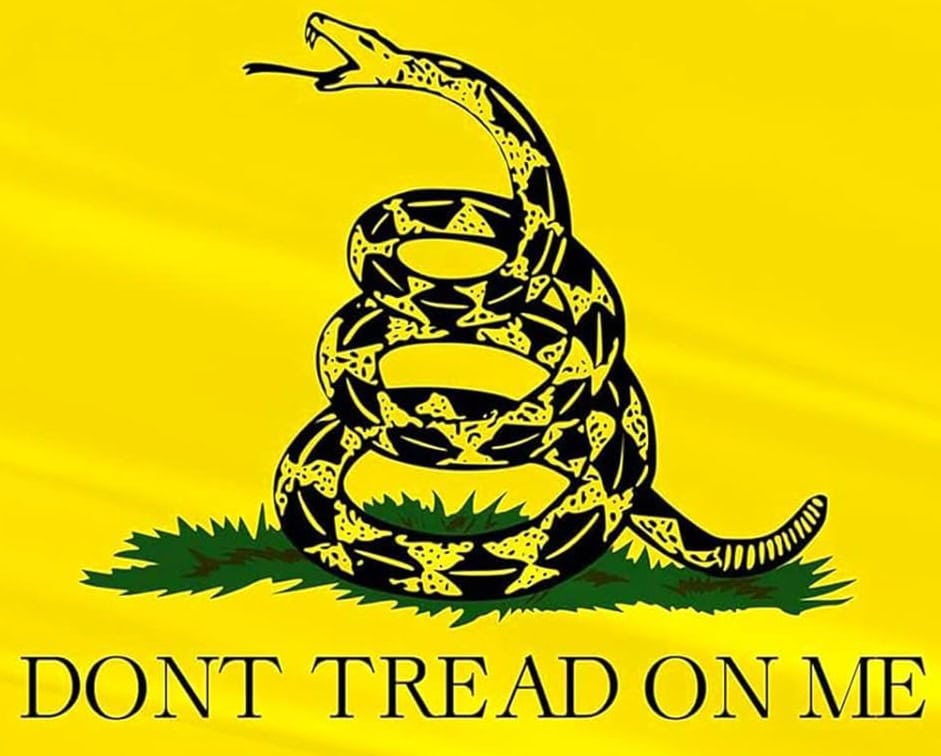
Gadsen flag. A symbol of the American Tea Party movement in the 2010s and its successor Trump MAGA movement.
Anatomy of an ICE arrest
In June 2025, seven months before the Renee Good death, Jonathan Ross was a leader of a team of agents who went to arrest a Minneapolis man who was in the United States illegally. This, according to court documents, was what allegedly happened:
Agents had surrounded the home of Roberto Munoz-Guatemala and his wife Patricia. Munoz-Guatemala left in his car. FBI agents activated emergency sirens and lights and ordered him to pull over. He did not. Ross maneuvered his vehicle diagonally in front of Munoz-Guatemela to force him to stop. Ross approached Munoz-Guatemala’s vehicle and ordered him to put the transmission in park. Munoz-Guatemala’s raised his hands. Ross ordered him to lower his window all the way and warned that he would break the window if he did not. Ross used a device known as a spring-loaded device to punch out the rear driver’s side window and reached inside the car to unlock the driver’s door. Munoz-Guatemala drove off while Ross’ arm was caught in the vehicle. He accelerated, dragging Ross down the street. Ross fired his Taser. The electric pongs penetrated Munoz-Guatemala in the head, face and shoulder but did not incapacitate him. Munoz-Guatemala dragged Ross the length of a football field. Ross was knocked free from the vehicle by force after Munoz-Guatemala bumped over a curb. Ross suffered multiple cuts, and abrasions to his knee, elbow and face. He described “pretty excruciating pain.” At a hospital he received dozens of stitches.
Munoz-Guatemala was bleeding from his injuries and had a woman call 911, saying that he was assaulted and didn’t know whether the person trying to stop him was an officer. He was arrested and charged with assault with a dangerous or deadly weapon. A jury found Munoz-Guatemala guilty. He “should reasonably have known” that Ross was a law enforcement officer and not a private citizen attempting an assault on him, the jury concluded.
Earlier: Demand to FBI: Cough up ICE homicide evidence
Earlier: Good’s family wary of federal probe of death
Earlier: Analysis: ICE agent shot Renee Good four times
Earlier: ICE agent ID’d in Minneapolis raid death