
WASHINGTON, Kansas – The Keystone Pipeline burst and spewed 558,000 gallons of Alberta crude oil over cropland and down ito a creek in northern Kansas. The oil, in a sludge form from Alberta tar sands, had been had been diluted with environmentally difficult bitumen so it could be forced under high pressure through 36-inch pipes. Emergency crews likened the crude to peanut butter. Like molasses it oozed over crops before the pipeline operator, TC Energy of Calgary, could stop the flow. By then the goo had slid into Mill Creek, which is a tributary of the Big Blue River in the drainage of the Kansas and Missouri rivers. The leak was discovered about 9 p.m.
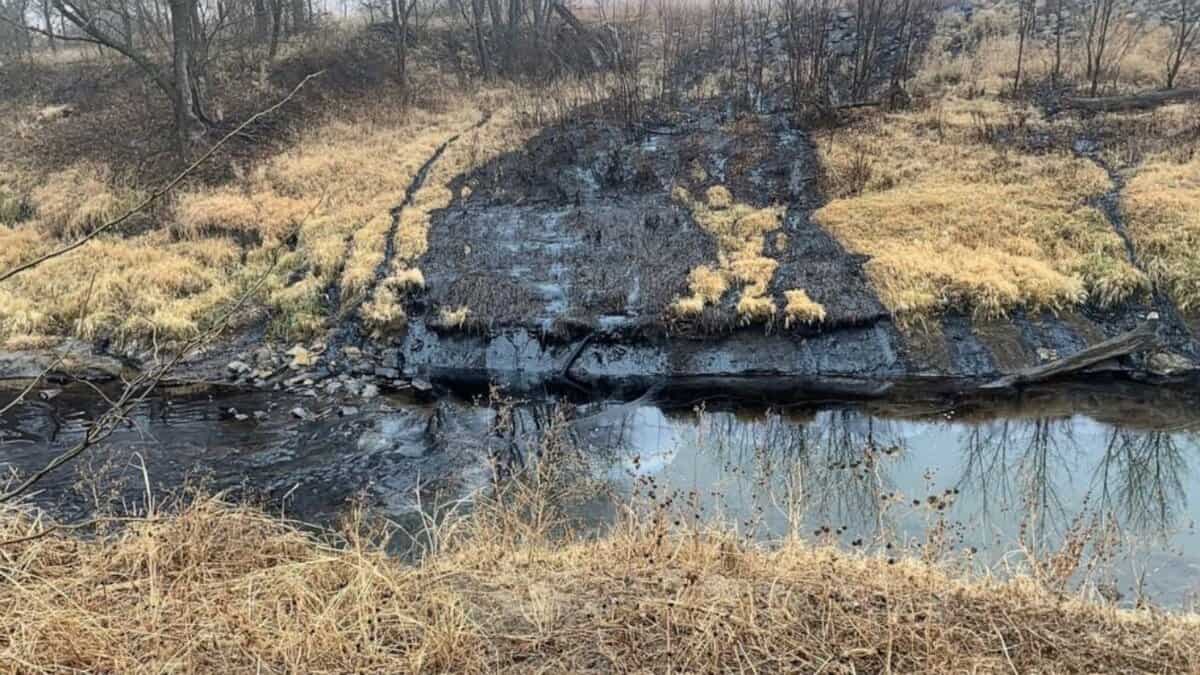
Oozing down a slope. Into Mill Creek just south of the Nebraska border 90 miles northwest of Topeka. .
Keystone profile
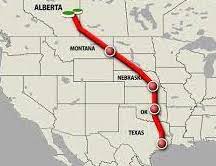
Starting in 2020 the line was built in phases from the Alberta tar sands to the Gulf Coast. The distance: 2,900 miles through Montana and the Dakotas. The operator is TransCanada, which has since changed it name to TC Energy. This line should not be be confused with the Keystone XL project, which would have had a roughly parallel course to the Gulf Coast but was denied U.S. permits because of concern over fossil fuels and global warming. The Keystone is apart from the leaks-plagued Enbridge lines across the Upper Midwest.