
WINONA, Minn. – Wildlife biologist Stephen Winter said the frequency of rattlesnake encounters in Winona County this summer probably is in a typical range. Winter, himself a snake-handler, said the season so far might be considered a bit “busy” with nine reports from law enforcement agencies to the rattlesnake response network – although not out of the norm. The state Natural Resources department has set up these county-level networks where rattlers have dens. It is the network that police call when a rattlesnake is reported. These are the calls to the network in Winona County in recent years:
> 2017: 12 calls.
> 2018: 12.
> 2019: 10.
> 2020: 8.
> 2021: 12.
> 2022: 10.
> 2023 so far: 9.
Winter, who is with the U.S. Fish and Wildlife Service, noted that the numbers represent only snake reports to agencies. Some people may summon someone they know to remove a snake, he said. About a dozen trained and certified snake-handlers are on the Winona city and county police call list.
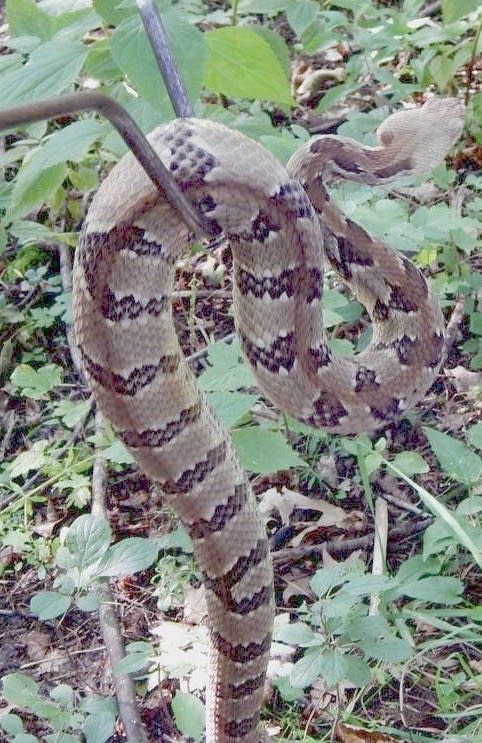
Hooking a rattler. Trained handlers use tongs and hooks to keep a rattlesnake’s fangs at a distance. Rare is it that a handler is bitten. If it happens, they know what to do. Image: Stephen Winter

Winter. A federal wildlife biologist based in Winona With his his wildlife camera.
If you see a rattler: What to do
WWSheriff Ron Ganrude: “Rattlesnakes see us as predators, not food, and as a result they don’t want anything to do with us. If you encounter a rattlesnake while you’re out and about, the best thing to do is to leave it alone. Rattlesnake bites are extremely rare. When they do happen they’re typically defensive bites because someone untrained decided to handle or harass a rattlesnake, and the snake didn’t like it.”
It is illegal to harm, harass, collect or kill rattlesnakes in Minnesota. They are listed as protected species.
If you have a rattlesnake in your yard, call the Winona Law Enforcement Center at (507) 457-6368. Ask that a rattlesnake handler. About a dozen handlers are on-call, all of them trained in handling snakes and relocating the snakes. When a report is called in, the police dispatcher sends a pre-recorded voice message to everyone on the county’s rattlesnake responder network, as well as a text message. Whoever calls the dispatcher back first is told the name, address, and phone number where the rattlesnake is located. Handlers use long tongs and a hook to guide the snake into a canvas bag. Snakes aren’t injured in the process. They are taken to a remote location and released. The snake usually slither out of the bag, shake their rattles loudly, and disappear quietly into the brush. Releases are on public lands or property where owners have granted permission.