
LACROSSE, Wis. — A kinder, gentler reminder of the place of Ho-Chunk presence in history is being installed in the Friendship Gardens in La Crosse’s Riverside Park — a bronze statue of tribal healer Betsy Thunder. Time: Monday at 7 a.m. The statue is a kind of numerical replacement for a Hiawatha statue that offended Ho-Chunks as stereotypical and locally irrelevant and has been removed. Betsy Thunder practiced her medicinal powers in the mid-1800s. She practiced her native-plant and herb remedies with Ho-Chunks as well as non-indigenous. us settlers. A formal dedication ceremony will be in July on United Nations International Day
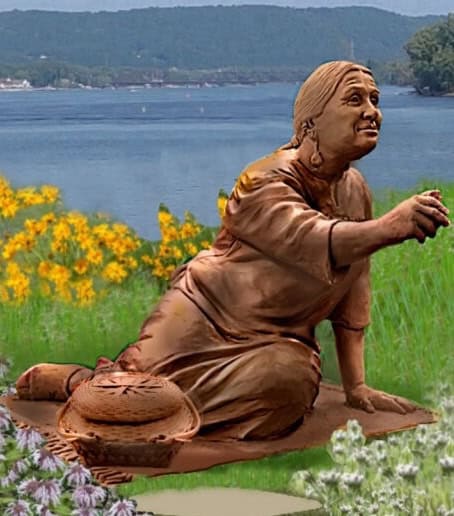
In restful repose. Near confluence of LaCrosse and Mississippi rivers.
Betsy Thunder profile
Betsy Thunder learned her medicinal arts from her husband William Thunder and passed them on to one of their sons. She knew little English but treated white patients and Ho-Chunks alike. She was paid with food, clothing and blankets. Her birth year is not known because of the loss of spoken history. Known is that she was part of the bloodline. Pioneer white businessman Hugh Mills credited her with saving his son’s life and gave her lumber for a small cabin. Later he built a room in his Black River house for her to treat patients and included her in family dinners, weddings and other events. She was born up the Black River and saw herself as tied to the land. When the U.S. government forced-marched Ho-Chunks to barren lands in Nebraska Territory, Betsy Thunder refused. She remained in her ancestral Black River area in what had become Wisconsin’s Jackson County. She died in 1913.
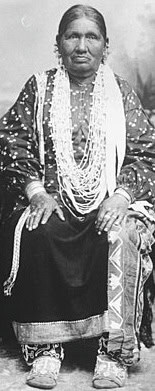
Remembrance. From an era when photographers used flash powder.
Earlier: Petition goal: Save Hiawatha statue
Earlier: LaCrosse to remove Hiawatha statue