
ST. PAUL, Minn. — Now is time to scrap the 1873 Comstock Act, created by Victorian era morality police, said two Minnesota elected leaders. U.S. Senator Tina Smith and Attorney General Keith convened a news conference to express concern over a theory being advanced by Republicans to the U.S. Supreme Court that the Comstock Act justifies limits on birth control nationally. The 121-yer-old law is still on the books. The Comstock Act prohibited the U.S. Postal Service from distributing “lewd” materials and included abortion medications. Smith called the law a relic. “It’s a law that was dreamed up by Victorian-era morality police who believed that it was the government’s job to police people’s private lives,” Smith said. She and Ellison, both Democrats, said the Minnesota constitution’s long-standing guarantee of a right to abortion and reproductive healthcare could be jeopardized if the Supreme Court accepts Comstock as a governing principle. Said Smith: “In Congress I will do everything that I can with my legislative power to make sure that this old and arcane law, the Comstock Act can’t be misused to attack people’s rights.” She noted that 60% of abortions use drugs distributed in the mail.
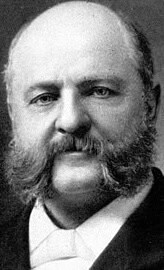
Comstock. U.S. postmaster general from 1873 to 1907. He was a prolific author. Books included “Frauds Exposed; or, How the People Are Deceived and Robbed, and Youth Corrupted” (1880), “Traps for the Young” (1883) and “Morals versus Art” (1877)) His morality crusade has been traced to his time in the Connecticut infantry during the Civil War. He protested vulgarities by fellow soldiers in their everyday conversation.

Ellison and Smith. Among Democrats organizing to derail 21st century applications of the 1873 prudery law to birth control.
Comstock Act profile
When Ulysses Grant was president, Congress created legislation known as the Comstock laws. The parent law, passed in 1873, was titled the Act for the Suppression of Trade in, and Circulation of, Obscene Literature and Articles of Immoral Use. The act criminalized mailing obscenity, contraceptives, aborticients, sex toys, and correspondence with any sexual content or information. The law and spin-offs bore the name of Antony Comstock, a leading anti-vice activist.