
WASHINGTON, Kansas – Keystone Pipeline operator TC Energy of Canada dispatched 250 workers to begin cleaning up a massive oil spill. Meanwhile, federal and state experts worked through the weekend to assess the environmental damage from 558,000 gallons of sludge-like Canadian tar-sand oil that found its way into a creek. The sequence of what happened, as reconstructed by TC and government regulators:
> 9:01 p.m. The break occurred.
.> 9:07 p.m. A trip alarm alerted monitors.
> 9:08 a.m. Isolation valves were closed remotely to block off the break..
In those eight minutes 14,000 barrels of unrefined oil sludge escaped — equivalent to 588,000 gallons. The sludge was under high pressure to force it through the pipeline. The break was the largest pipeline disaster in TC Energy history.
Earlier: Keystone pipe bursts; sludge into Kanas stream
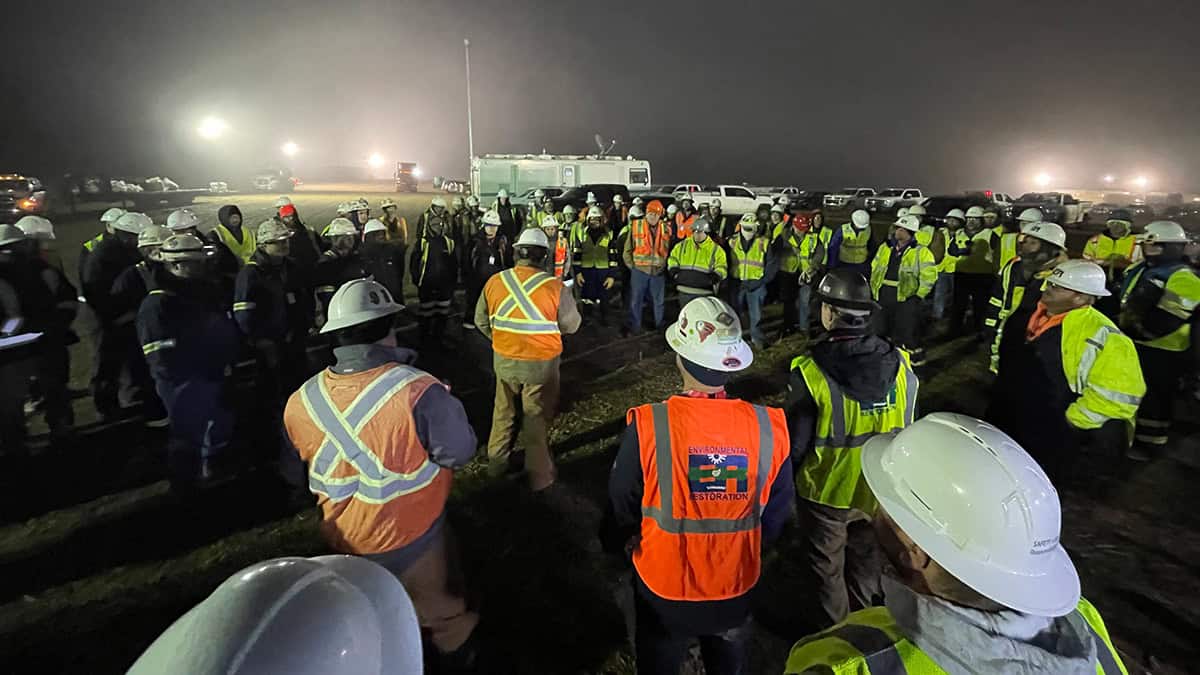
Within 24 hours. TC Energy mobilized 250 workers and truckloads of heavy equipment for the clean-up . The spill, in north Kansas, was the largest in recent U.S.history.
Verbatim
TC Energy: “The product remains contained and multiple vacuum trucks, booms, and additional resources are onsite as we continue the recovery process. Repair planning is also underway, as are shoreline assessments.”