
KELLOGG, Minn. — A project to restore the peregrine falcon population, begun nearby in the Weaver Dunes in 1986, has so far produced 164 mating pairs in 12 states and a total of 440 birds. The greatest success has been in Minnesota with 44 pairs and in Wisconsin with 38, the St. Paul-based Midwest Peregrine Society reported. The peregrines disappeared in the 1960s due to the Word War II insecticide DDT. The last known U.S. nest had been in Whitewater State Park near Elba in Winona County. Among current knows nesting sites:
Minnesota
Houston County: Great Spirit Bluff, Red Hawk Bluff,
Olmsted County: Mayo Clinic in Rochester.
Wabasha County: Lake City.
Winona County: Homer Bluff, John Latch State Park, Queen’s Cliff, Whitewater State Park,
Wisconsin
Buffalo County: Alma Marina, Castle Rock, Dairyland power plant in Alma, Maasen’s Bluffs, Twin Bluffs at Nelson,
LaCrosse County: Goose Island Bluff, US Bank in LaCrosse.
Vernon County: Bad Axe River Country Club, Bad Axe River North, Red Bird Bluff.
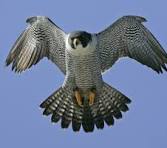
Very fast. Also rare but reversing extinction.
Peregrine profile
Peregrines, also known duck hawks, are a crow-size bird with blue-grey backs, barred white underparts, and black heads. Peregrines are fast. They can speed-dive 200 mph for prey. The known record is 242. Typically they weigh two pounds. They like cliffs for nesting as well as urban settings like tall buildings.
Peregrin repopulation
Bird scholar Tom Cade launched a captive peregrine breeding program at Cornell University in New York in 1962. Cade’s group released its first peregrines, two paired birds, at Weaver Dunes near Kellogg in the mid-1970s. One pair was lost to predator owls. The other was recaptured and re-released and, once nested, produced eggs. Slowly the population has grown with birds being captured, banded and taken to diverse sires, mostl y in the Upper Midwest, to propogate.