
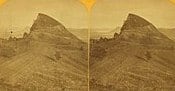
WINONA, Minn. – After fire destroyed most of downtown Winona 1862, there developed a demand for stone to replace the wooden sidewalks. In the 1880s the brothers John and Stephen O’Dea saw a local opportunity in a pine-covered half-dome bluff that people called Sugar Loaf because, well, that’s what it looked like — the little loaves in which sugar was packaged at the time for sale. The O’Deas asked: Why bring stone from elsewhere by wagon and steamboat when the rounded blufftop 500 feet above the south end of town was comprised of a type of sedimentary limestone – Oneita dolomite. The limestone, they recognized, was ideally suited for sidewalks and also other construction in the fast-growing river town. They chipped away at the rock from the top and hauling it 500 feet down in buckets hung on a suspended cable tram. When quarrying ended in 1887, the former sugar-loaf dome was a distinctive pinnacle that became Winona’s signature landmark on postcards and stereoscopic travel collections. It remains 130-plus years later albeit an occasional chunk breaking off from the inevitable freezing and thawing. Today the night it’s illuminated — a beacon into the future.

Limestone beacon. A landmark for seven generations. Image: Steve Lunde
.
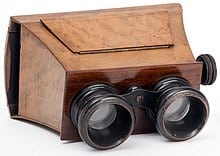
Images that made Winona. Three-dimensional stereotype travelogues, a late 19th century craze, showed Winona’s distinctive sugarloaf bluff to the world. This pre-quarrying 1877 image was by the noted stereoscope photographer Charles Zimmerman. Stereoscope images were still the rage in the 1950s with the View-Master device are still around, these days from toy-manufacturer Ideal.