
ST. PAUL, Minn. — The Minnesota Court of Appeals has raised questions in a Winona drug bust about whether the state Fuzzy Dice law has been overused by police in traffic stops. The court overturned a 2020 drug bust conviction because a state trooper smelled air-fresheners in a car and then searched the vehicle. The Court said that air-fresheners were insufficient evidence to proceed to a search. The Fuzzy Dice law, which dates to 1957, forbids hanging objects that obstruct a driver’s vision. The law has become a standard police tool to justify vehicle searches. In the 2020 Winona case, Lamont Shauntel Thomas Jr. of LaCrosse was stopped by the state trooper on Interstate 90 for speeding. The trooper admitted in court documents that he had been ready to release Thomas with a warning when he smelled air fresheners. Suspecting the air fresheners were a cover-up for marijuana, the trooper searched the vehicle and found 1,000 Ecstasy pills, 28 grams of cocaine, 25 grams of marijuana, and $200 cash. Thomas was convicted in Winona County District Court of dealing drugs. In the appeal Thomas claimed that the air fresheners were a ruse for the search and as evidence should have been quashed. The appellate court agreed. The conviction carried a presumptive sentence of 5-1/2 years in prison but the Winona judge waived all but nine months and placed Thomas on 15 years of probation.
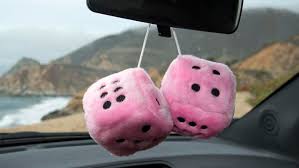
Police protocols. Will cops now need to abandon rearview mirror ornaments as a justification to search vehicles?
Forbidden charms
Aming what the 1957 Minnesota law forbids in windshields while a car is in motion: Lanyards,air fresheners, beads, mirror charms, ornaments, bandanas, headphones, handicap parking permits.
Profile: Fuzzy dice laws
Fighter pilots in World War II decorated their cockpits with good luck charms. These included hanging dice. After the war it became trendy to hang fuzzy dice from rearview mirrors in cars. In the 1950s, however, about half the states created laws to ban objects “suspended between the driver and the windshield.” The justification: Safety. The fine: $100 in Minnesota, in some states as much as $300. There are between 300 and 500 arrests a year in Minnesota for violations, but many other stops for dangling rearview mirror items led to other charges and the dice become such minor issues that they aren’t logged in court documents. Civil rights activists have grown increasingly vociferous against Fuzzy Dice laws, claiming they are used by white police officers as a gateway protocol for harassing black motorists. Such was the uproar in 2021 in the Minneapolis suburb of Brooklyn Center, when a white police officer shot and killed Daunte Wright, an unarmed 20-year-old black man.