
ST. PAUL Minn. — Minnesota joined 21 other states in a legal challenge to President Trump’s executive order to end automatic citizenship for children born in the United States to dark-skin refugees and immigrants whose legal status is uncertain. Attorney General Keith Ellison accused Trump of violating the birthright citizenship provision in the U.S. Constitution. Ellison called Trump’s order an “unprecedented, blatant breach of the Constitution.” Critics saw the Trump order flowing from the white supremacist subtheme in his presidential campaign. Dismantling birthright citizenship is going too far in Tramp’s crackdown on unlawful immigration, Ellison said. At stake, he said, is the citizenship of 150,000 children born every year. They would lose their rights to work, to vote, to serve on juries, to run for certain offices, and to benefit federal protections and services available to fellow Americans. Children could also be rounded up with their parents and forced into deportation camps and shipped out of the country.
Birthright citizenship profile
The U.S. Supreme Court upheld birthright citizenship as a constitutional right in the Kim Wong Ark case in 1898. The decision involved a child born in the United States to Chinese nationals living in the country. The Court ruled that the child was a U.S. citizen. Congress codified birthright citizenship in the 1952 Immigration and Nationality Act.
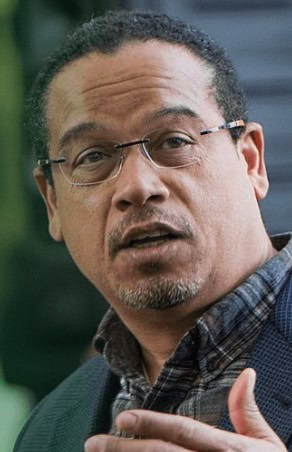
Ellison. Attorney general since 2019. A Democrat. Earlier in Congress from Minneapolis for 12 years.
Lawsuit profile
Attorneys general in these states have gone to U.S. District Court in Massachusetts against the Trump order: California, Colorado, Connecticut, Delaware, Hawaii, Maine, Maryland, Massachusetts, Michigan, Minnesota, Nevada, New Jersey, New Mexico, New York, North Carolina, Rhode Island, Vermont and Wisconsin, and also the District of Columbia and the city and county of San Francisco.
These states have taken similar action in U.S. District Court in Washington: Arizona, Illinois, Oregon and Washington.
The suits noted that Trump’s order will lead to cuts in federal funding on which states rely to provide essential services to vulnerable children, such as healthcareand foster care and also to people with disabilities.
Critics saw the Trump order as part of drastic federal budget cuts to offset revenue losses from his proposed massive tax cuts for wealthy people and corporations.