
WINONA, Minn. – A light airplane with an engine problem made an emergency landing at the Winona airport. Three people were aboard. There were no injuries. This was about 11:30 p.m. The plane, a low-wing single-engine Piper Arrow, was on a 277-mile flight from Appleton, Wisconsin, west to Mankato. Winona Fire Chief Curt Bittle said two fire engines responded to the airport with lights and foam, but the plane was already on the ground. All three people aboard were evaluated by first-responders and cleared medically. Without power, tje plne had to be towed off the runway to a hangar. It was believed that the plane’s engine repairs could be performed at the airport.
Winona airport profile
The city-owned Max Conrad Field, named for a Winona aviation hero, opened in 1948. Located on 575 acres in suburban Goodview along Mississippi River swamps. The white-green beacon operates sunrise to sunset. The 5,600-foot runway is grooved asphalt in good condition. Based at the field: 25 single-engine craft; two multi-engine aircraft, one jet, and one glider. The operator, Win Air, managed by George Bolon. The nearest other fields: Rushford, 15 miles away; LaCrosse, 21 miles; Caledonia, 27 miles; Preston, 29 miles; Rochester, 32 miles. Annual traffic: 10,000 operations. Services available: Fuel, major airframe and powerplant service. No scheduled commercial service since the 1970s when Mississippi Valley Airlines withdrew and before that North Central Airlines.
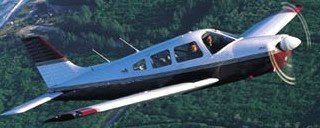
Piper Arrow. The aircraft is an advanced version of the Piper Cherokee, of which 7,800 were built between 1965 and 2007. The Arrow can carry six passengers, as opposed to four in the Cherokee. The market was personal and air taxi use. Empty weight: 1,800 pounds. Usual powerplant: 300 horsepower. Speeds: 175 max, 165 cruising. Range: 840 miles. Ceiling: 16,000 feet.
Max Conrad profile
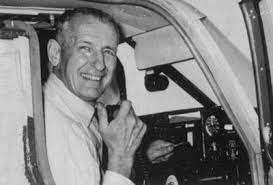
1903-1979
Conrad, a Winona-born aviator, was nominated for the Carnegie Medal for heroism for flying his Piper aircraft in 60 mph winds to locate and help rescue stranded duck hunters during the 1940 Armistice ay Blizzard in the Mississippi River backwaters. Conrad made several flights, dropped tins with whiskey, sandwiches, cigarettes, and matches to marooned survivors in the unexpectedly sudden minus-10 temperatures . From the air Conrad helped direct rescue boats to survivors. Even so, dozens of hunters died in the storm. Conrad later set nine official light plane world records. He was awarded the Louis Bleriot Medal in 1952 and the Harmon Trophy in 1964.