
WINONA, Minn. – Black eyed peas may be dismissed as mealy, bland rejects to Upper Midwest palates. But in the American South they’ve been valued culturally since 1865 when they came to mean survival. To this day, Southerners, especially in Georgia, start every New Year’s Day morning with black eyed peas for good luck the year ahead. The story:
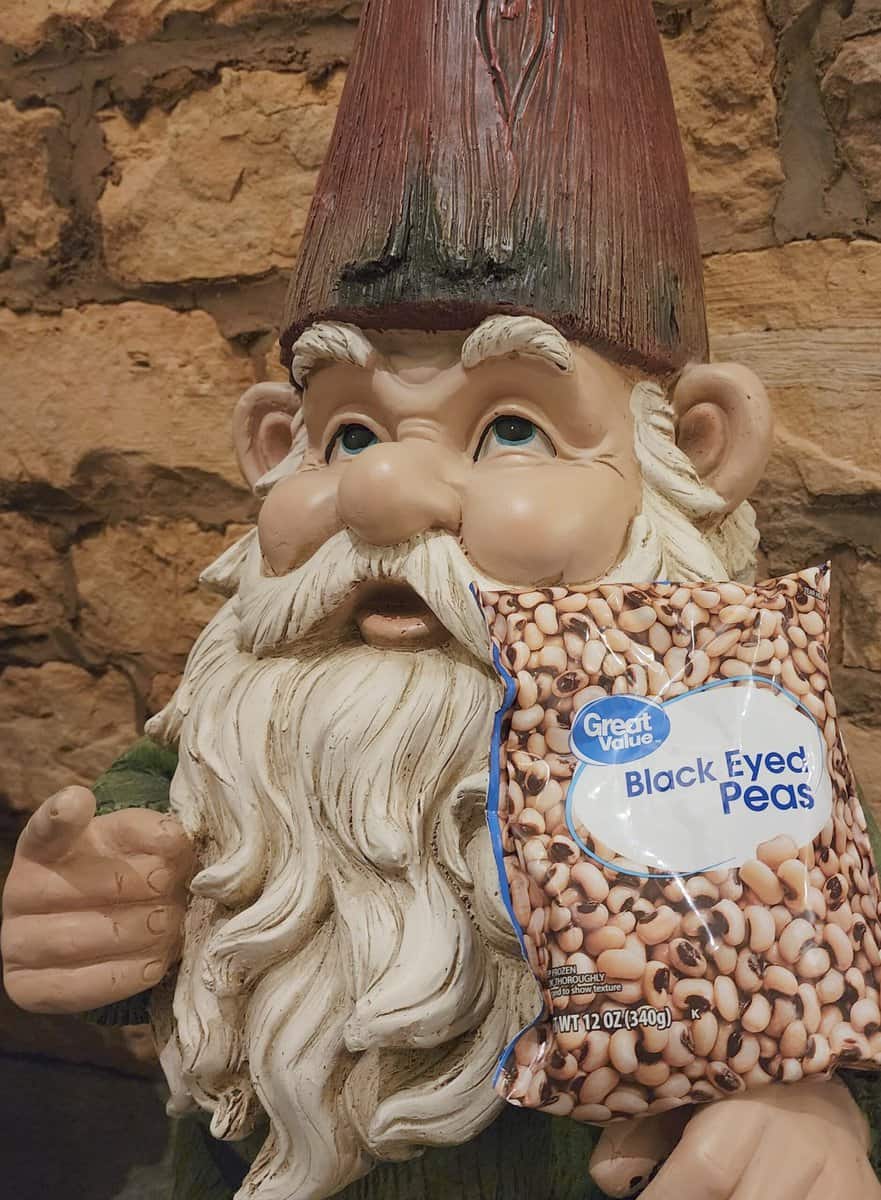
He knows his peas. The iconic Norse gnome Godfrey has no roots in old Confederacy but appreciates why Southerners revere black eyed peas for breakfast on New Year’s Day. These days they’re canned or frozen in plastic bags. Image: Steve Lunde
After capturing Savannah in 1864 the Union general Tecumseh Sherman launched a 250-mile “march to the sea” to Savannah to cut off Confederate supply lines. It was a scorched earth campaign. Sherman ordered crops burned and livestock slaughtered. Militarily the campaign succeeded but at horrible civilian cost. By December people in the Union’s path were starving. There was, however, a resilient crop — the black eyed pea, which came back in time to see people through the miserable tough winter of 1864 and 1865. This humble but hardy legume, which had been mostly hog feed, saved the people from staration. To this day, black eyed peas are a Southern symbol for good luck. Every January 1 begins with a bowl of black eyed peas.
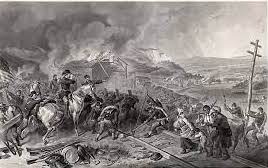
Ravages of war. After the war, in 1868, artist and engraver Alexander Hay Ritchie depicted “Sherman’s March to the Sea.”
,