
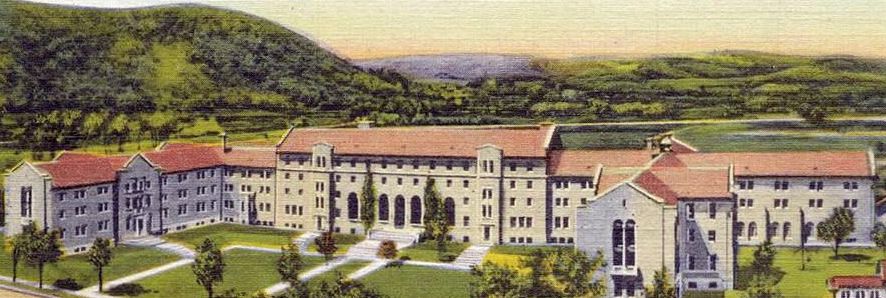
Lourdes Hall. One three St. Teresa buildings for sale.
After 20 years Winona State shuttering its West Campus
WINONA, Minn. – Winona State will close the Lourdes and Maria dorms at the old College of St. Teresa campus and put them up for sale, the university confirmed. Students who were ready to move in for fall classes, about 200, instead will be assigned to dorms on the main campus, said university spokesperson Tesla Mitchell. Mitchell’s spin on abandoning the West End campus, 1-1/2 miles from the core campus, was that the decision was a student-friendly “centralization.” The spin on the university’s plan to the State College system trustees was financial. If all goes according to plan:
> Lourdes and Maria dorms already have been closed.
> TheTau Center, which has 20 dorm rooms, will remain open for the time being for students in Covid isolation.
> In October the university will advertise for bids on all three buildings.
> In November a decision will be made whether the bids are sufficient to proceed.
> In December there could be a second round of bidding if necessary.
> Revenue from the sale will finance the razing the 1950s-era Lucas-Prentice dorm complex on the main campus at Huff Street at King Street.
> Perhaps building a new dorm will be at the Lucas-Prentiss site if enrollment warrants.
The university will realize immediate financial gains. Operational and maintenance costs will be saved. This includes shuttle buses for students to traverse back and forth to the main campus for classes. Meal service at Lourdes will end.
Splitting up CST
The College of St. Teresa, historically a Catholic women’s school, closed in 1998 with its enrollment evaporating. The Franciscan Sisters, who had founded the college, sold off the 11-acre property piecemeal. The major buyer was Winona State University, whose burgeoning enrollment bespoke the need for dorm space. Winona State, however, bought only three buildings – Lourdes, Maria and Tau, Saint Mary’s University considered expanding from Terrace Heights to the campus but backed off. Most of the rest of the property went over the years to the Cotter Catholic schools, which centralized itself at the campus.