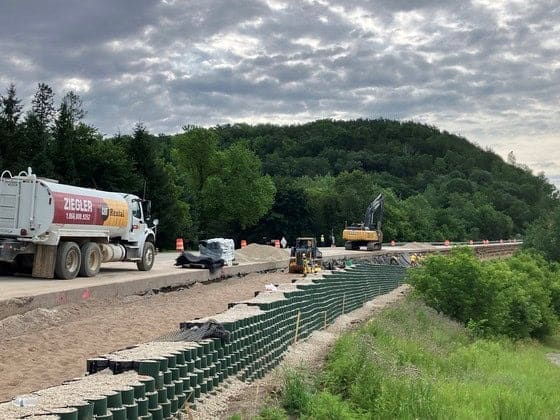
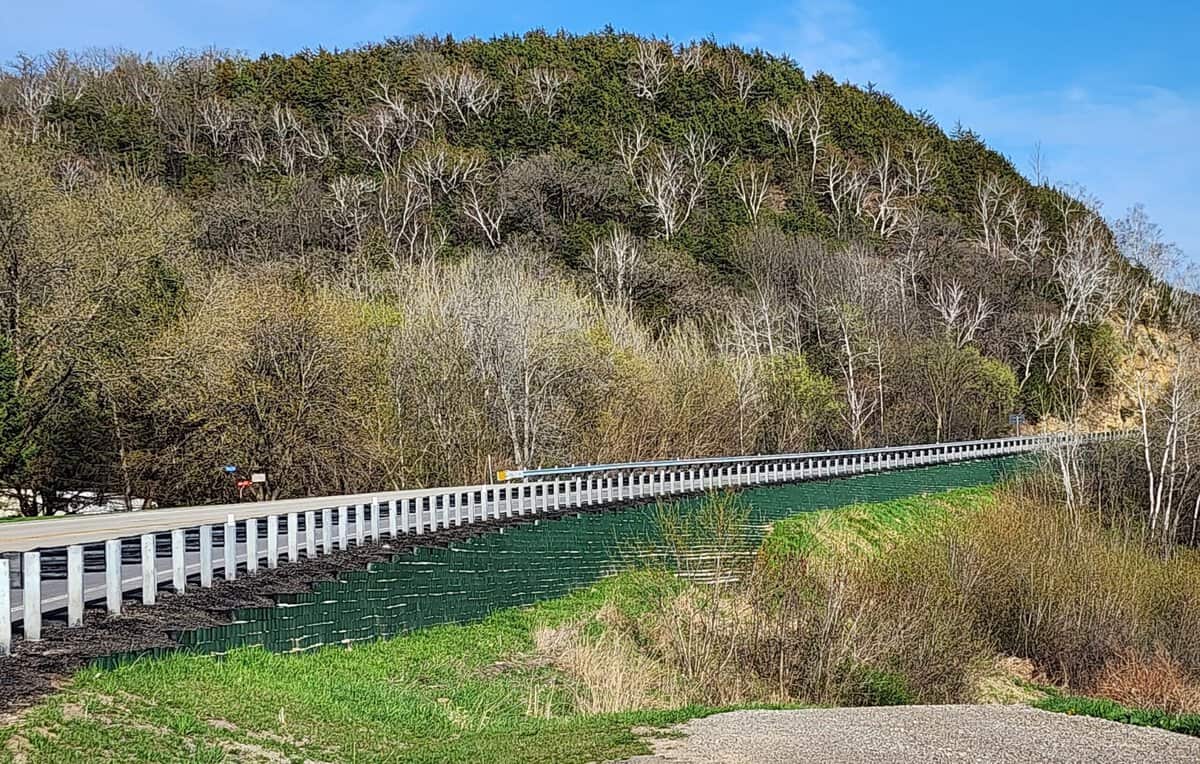
STOCKTON, Minn. — For rural pioneers Stockton Hill was a footpath to Winona. The 750-foot vertical climb to a saddle in the bluffs was sweaty but, well, shorter. Then it became a wagon trail — still a slow and tough climb although now horses bore the burden. Engineers in the 20th century modified the route for motorcars. They chose the original route but straightened some of the earlier sallies up gullies with massive earth fills, one a 200-foot drop almost straight down. The shortened route was a bit shorter although steeper climb. Maintenance, however, was a pain. Every downpour overwhelmed culverts deep under the earth fills, eroded the already narrow shoulders, and loosed uphill soil and brought trees skidding down on the pavement. Now we have Stockton Hill 4.0. Engineers last summer shut down the route to pound hundreds of round pilings in rows four deep, through karst limestone into solid bedrock in the most vulnerable stretches. The project was a $7.3 million fete. To some doubters it seemed like overengineering, but so far it’s helped. There has been less bluffside slippage. Too: The pilings allowed a slight widening of shoulders to anchor sturdier guardrails. Overengineering? Time will tell. And also nature’s deference to gravity.
Earlier: Yea! Stockton Hill barricades removed
Earlier: Missing Stockton Hill? Wait awhile longer
Earlier: What’s going on up Stockton Hill
Earlier: Stockton Hill upgrade begins Monday

21st century retaining wall. Barely visible to motorists climbing of Stockton or from anywhere else on either side of Stockton Hill. Has carried U.S. Highway since 1926 from its terminus in Chicago west to Yellowstone Park. Images: Steve Lunde
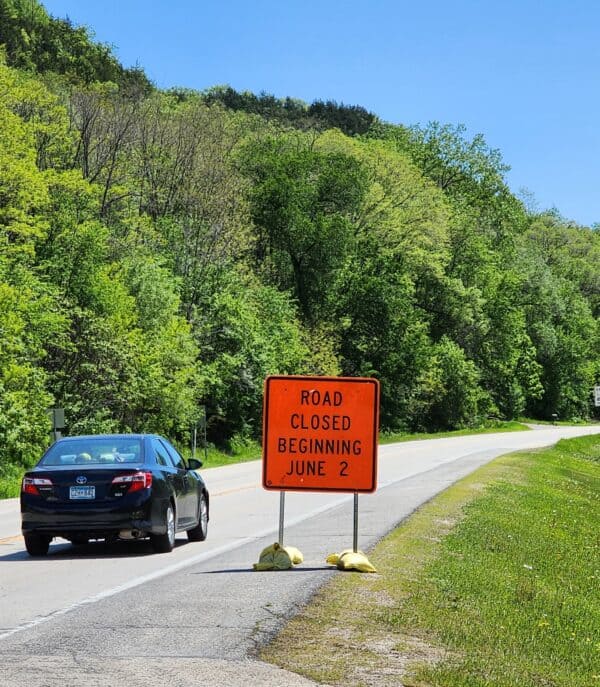
A construction portfolio