
NEW YORK – Experts have taken a second look at a purported Vincent Van Gogh painting that showed up in the ritzy Minneapolis suburb of Minnetonka and declared it’s authenticity. If so, the impressionistic work, called “Elimar,” may be worth $15 million. It was purchased for less than $50 eight years ago by a Twin Cities antiques dealer at a garage sale in Minnetonka. The painting has a rich and mysterious past:
> If authentic, “Elimar” was painted Van Gogh probably between 1889 and 1890 when he was a self-admitted suicidal patient at a psychiatric asylum in southern France. It was a period when he created roughly 150 paintings, including the masterpieces “Irises,” “Almond Blossom” and “The Starry Night.”
> No one seems quite sure when “Elimar” — again, if authentic — disappeared into the often-murky arts trading market. Also, Europe suffered two major wars in the intervening century with massive dislocations. It’s possible that an American soldier found the painting and took it home after hostilities, probably not realizing its significance.
> At some point the painting, on a relatively small canvas at 18 by 16-1/2 inches, ended up at a household in Minnetonka.
> In 2016 a Twin Cities antique dealer bought the painting for less than $50 at a garage sale, apparently unaware it could be a Van Gogh.
> By 2018 the Twin Cities antiques dealer asked the Van Gogh Museum in Amsterdam for an evaluation.
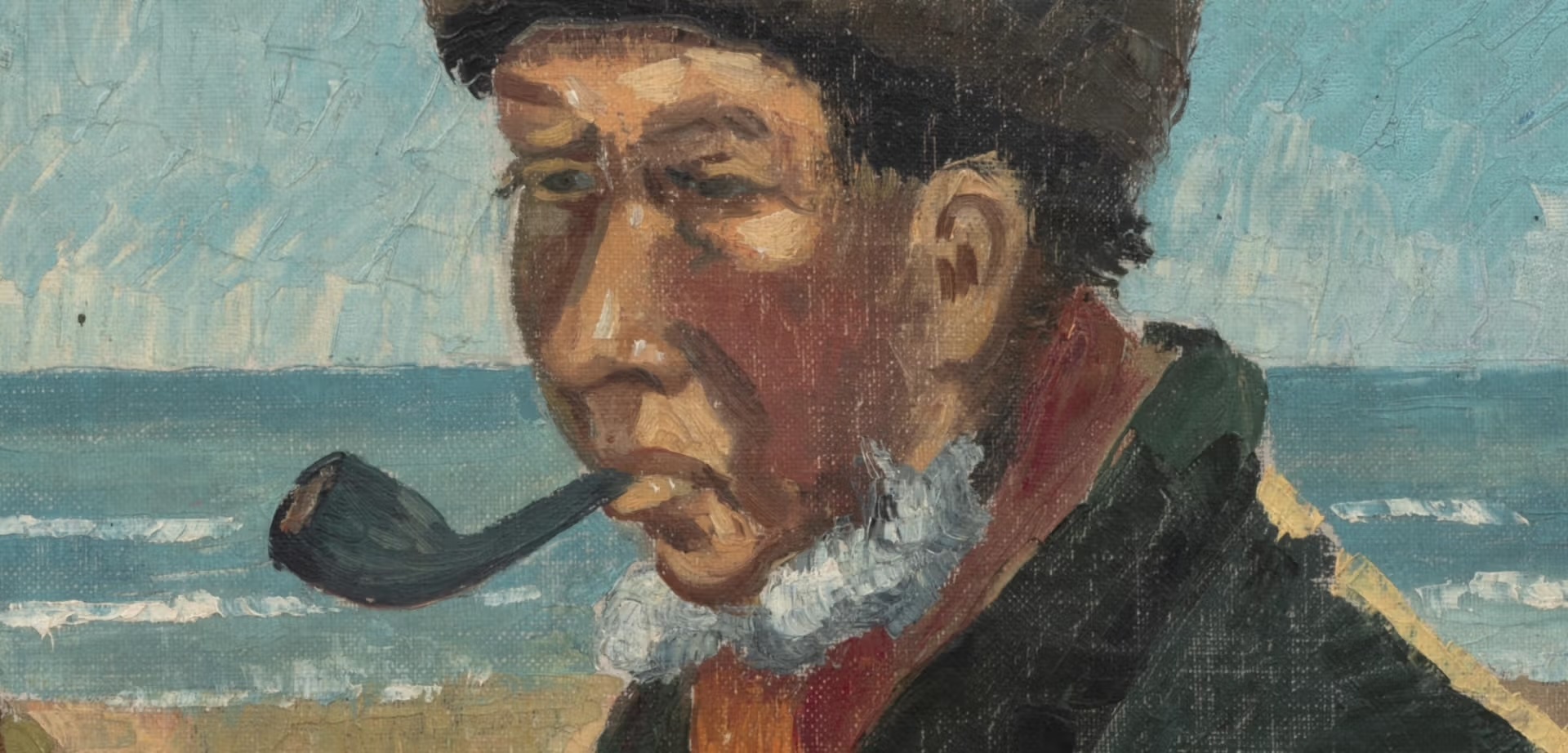
“Elimar.” Portrays a somber-looking man with a white beard and with a pipe in his mouth and a fur hat. He is repairing his net next to an empty shoreline with the word “Elimar” — likely his name = — scrawled in the lower right corner. The painting is a three-quarter that was common with Van Gogh. A textbook analysis on “”Elimar”: “This moving likeness embodies Van Gogh’s recurring theme of redemption, a concept frequently discussed in his letters and art. Through ‘Elimar,’ Van Gogh creates a form of spiritual self-portrait, showing himself as as he wished to be remembered.”
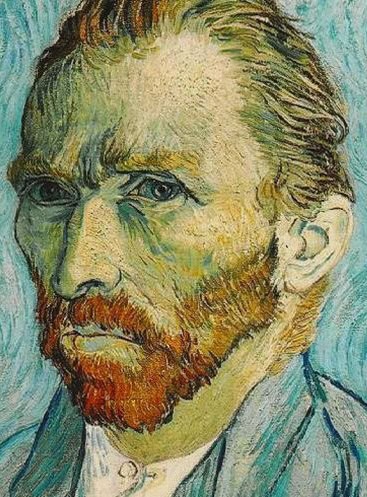
Van Gogh. 18053-1890. A Dutch post-Impressionist painter. A among the most influential figures in the history of Western art. In just over a decade he created 2,100 artworks, including 860 oil paintings in the last two years of his life.
Verbatim
Lawrence Shindell, president, LMI Group: “By integrating science and technology with traditional tools of connoisseurship, historical context, formal analysis, and provenance research, we aim both to expand and tailor the resources available for art authentication based on the unique properties of the works under our care.” Van Gogh died in 1890 at age 37. It was suicide by gunshot.
> Three months later the Museum responded: “We have carefully examined the material you supplied to us and are of the opinion, based on stylistic features, that your work cannot be attributed to Vincent Van Gogh.” The museum prides itself on “rigorous procedure” albeit traditional methods to authenticate possible Van Goghs.> In 2019 a New York art investment firm, LMI Group International, acquired the work and commissioned a group of 20 conservators, scientists, historians and a patent attorney for a second opinion by looking again at not only stylistic clues but also applying recently developed tools in arts forensics.
> In 2025 LMI released a 458-page report that declared the Minnetonka “Elimar,” was indeed a Van Gogh’s missing umber.151. The report cited stylistically distinct elements that appear throughout Van Gogh’s oeuvre, including marks under the eyes, marks at the corner of the mouth, eyelashes, whites of the eyes often in blue or green, a pronounced nasal-labial line, odd ear planes, and the color of cuff set off from the sleeve. Further, the LMI report said, a red hair that was embedded partially in a corner of the painting was confirmed from a man. Van Gogh had red hair. Also, a finish made of egg white was something that Van Gogh used. Too, the thread count in the canvas matched those made during Van Gogh’s time, as did the pigments used to paint the work — except one, the organic compound PR-40, which hadn’t been thought to be available Van Gogh’s time. PR-40 in the sky of the portrait usually is credited to a French patent from 1905 and 1906. But the LMI Group traced PR-40 to a 1883 patent to an inventor n a Paris suburb. Van Gogh’s brother Theo, who lived in Paris, regularly supplied him with paint. As a result, conservators can now date and authenticate works with this pigment to the late 19th instead of the early 20th, century.
> So is the Minnetonka “Elimar” a fake or real? And is it really worth $15 million. Déjà vu, the final ruling will need to come the Van Gogh Museum in Amsterdam.