

Lone firefighter. Among smoldering hay bales that could erupt any moment from internal combustion. This in an open Quonset shed on a dry day. The danger comes from internally trapped moisture.
Expert advice: Check temps regularly, don’t tread on bales
WINONA, Minn. – Farmers need to monitor the heat that baled hay generates to prevent spontaneous combustion, the Winona County emergency management director said. In the past three weeks, said Ben Klinger, there have have been six hay barn fires in the county – thrice the number in a whole typical year. Klinger noted that even with dry conditions, hay retains moisture making it susceptible to spontaneous combustion. What to do? Klinger’s advice:
> Daily monitoring. Anything warmer than 150 degrees is dangerous. Disassemble the hay and spread it out to promote circulation.
> Four-hour monitoring. If 160 degrees, disassemble immediatey and spread.
> 175 degrees. Call the fire department. Don’t touch anything. Disassembling at 175 degrees or higher introduces oxygen that can cause spontaneous ignition.
Klinger said that haystacks can burn internally, creating hidden voids that make it dangerous to crawl or walk across. Planks should be put down. A safety line should be used. Have a second person present to assist in case of trouble.
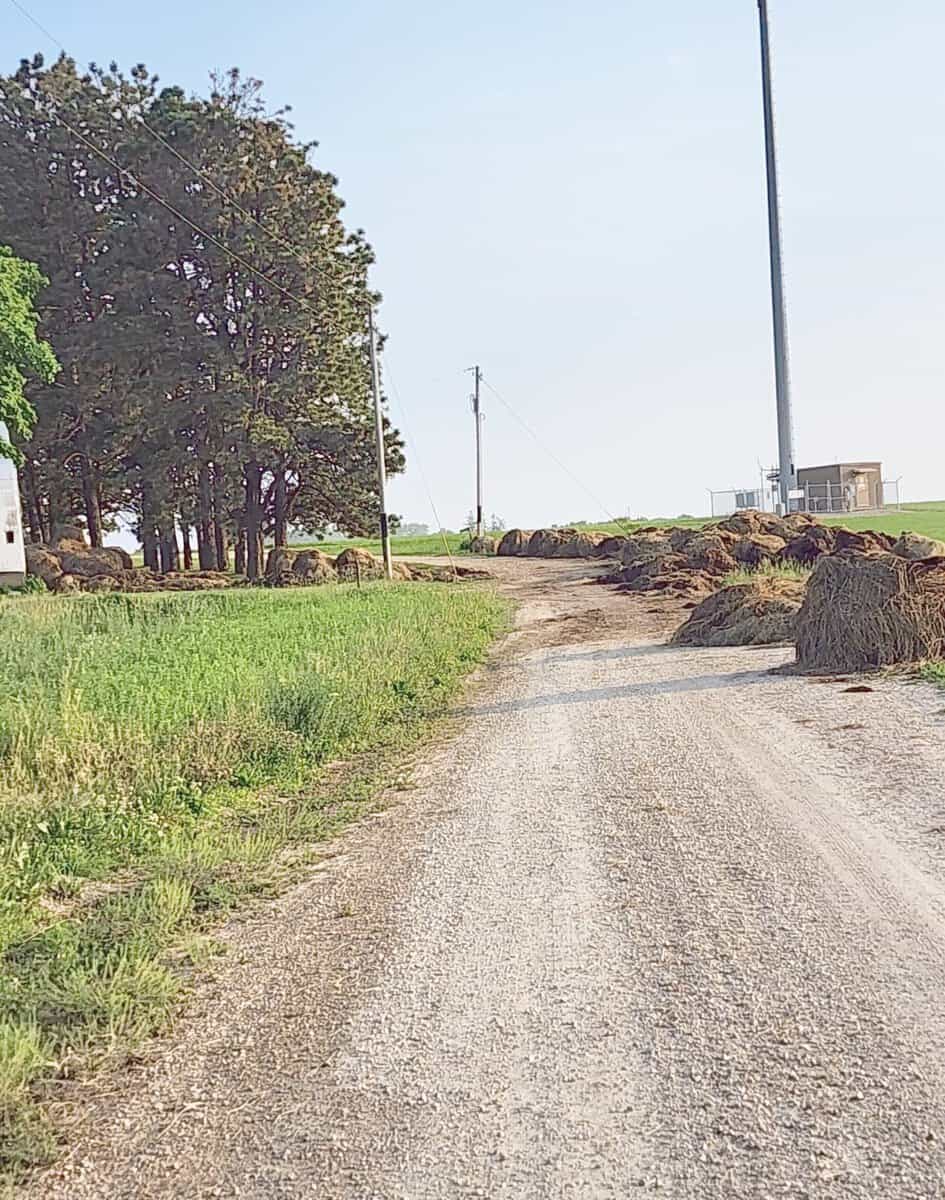
Hay fire aftermath. Wilson Township firefighters yanked smoldering and burning bales from a shed in a mid-June shed fire and spread them out along Stone Point Road to burn out. The hay fire was among the first in a rash of them this spring. Anything salvageable after burning internally and then being soaked with water to cool off? Chalk it up as a lost crop. Image: Steve Lunde