
WINONA, Minn. – Saint Mary’s University, dogged by enrollment and revenue drops, is laying off 13 faculty and dropping 11 undergraduate programs at its Winona campus. James Burns, university president, made the announcement. Although months in planning, Burns delayed the announcement until after weekend graduation ceremonies with the campus devoid of students. Programs being eliminated:
> Actuarial science.
> Art.
> English.
> History.
> Human services.
> International business.
> Music.
> Music industry.
> Spanish.
> Theatre.
> Theology.
Students in the majors will be able to complete their degrees, Burns said. Also, new students in the majors would have the option to pursue the majors on an accelerated timeline. He did not name the 13 faculty whose jobs were being cut. With 96 full-time faculty, the cuts comprise 14% — or one in five.
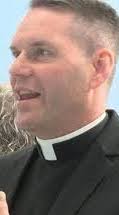
Burns. President since 2018. Earlier Father Burns was dean of the Woods College of Advancing Studies at Boston College. He holds a divinity degree from St. Paul Seminary at St. Thomas University in the Twin Cities.
A tale of two campuses
Since Louis DeThomasis was president, from 1984 to 2005, Saint Mary’s has been reinventing itself with lucrative graduate programs in the Twin Cities. The courses are staffed mostly by inexpensive part-time staff with minimal employee fringe benefits. As a commuter campus the Twin Cities program is heavy with night courses for working professsionals. There are no dorms or costly physical plant to maintain. This contrasts to the historically residential Winona campus that dates to 1912 and has a undergraduate tradition. Overall Saint Mary’s claims a student headcount of 6,273 students, of whom only 970 are at the Winona campus.
Verbatim
Burns: “Higher education is experiencing major disruption, exacerbated by the pandemic and declining number of high school students,” SMU President Father James Burns said in a statement. “In this climate, few schools can continue business as usual.”
“We want to provide students with programs that are in demand, have a high potential for growth, and that many want to pursue now. And we are aligning the programs we offer with our mission as we answer the question: how can we best prepare our students for work, for a life of ethical service, to pursue the greater good and the truth in all things while answering their questions about meaning and purpose?”